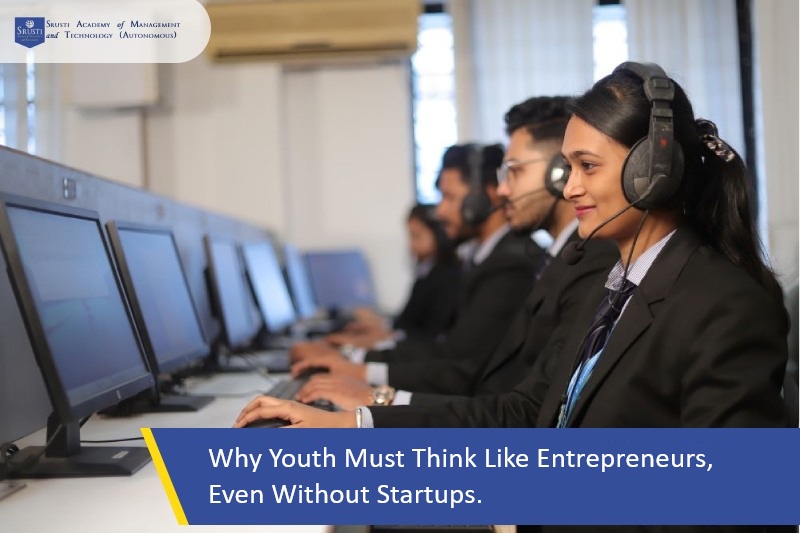
Why Youth Must Think Like Entrepreneurs, Even Without Startups.
In today’s rapidly changing world, the word entrepreneur is often associated with startups, funding, and business ideas. However, entrepreneurial thinking is much bigger than starting a company. For today’s youth, thinking like an entrepreneur is not a choice—it is a necessity, even if one never launches astartup. The reality is simple: degrees alone no longer guarantee jobs; job security is shrinking, and industries are changing rapidly due to technology, automation, and artificial intelligence. In such an environment, the youth who survive and succeed are those who think differently—those who think like entrepreneurs.
Entrepreneurial Thinking Is a Mindset, Not a Business
Entrepreneurial thinking means identifying problems, taking initiative, being creative, and finding solutions. It is about ownership, not job titles. A student who creates a new way to study better, a young employee who improves a work process, or a freelancer who builds a personal brand—all are thinking like entrepreneurs. This mindset teaches youth to stop waiting for opportunities and start creating them.
From Job Seekers to Value Creators
Traditional education often trains youth to become job seekers. Entrepreneurial thinking transforms them into value creators. Instead of asking, “What job can I get?”, the question becomes, “What skills do I have, and how can I use them to solve real problems?” When youth focus on value creation, employability increases naturally. Employers today look for problem-solvers, innovators, and self-driven individuals—not just qualification holders.
Resilience in an Uncertain World
Failure is a natural part of entrepreneurship, and the ability to handle failure helps you develop emotional strength. Young people who think like entrepreneurs rapidly learn, adapt faster, and are not afraid of change. Amid layoffs, gig work, and short-term contracts, this resilience is a powerful life skill. Entrepreneurial youth are less reliant on any one particular source of income and more receptive to exploring, learning, reskilling, and searching for alternative pathways.
Entrepreneurial Thinking Improves Leadership and Confidence
Entrepreneurs take responsibility. This sense of ownership fosters leadership qualities like decision-making, accountability, and confidence. Even inside organizations, entrepreneurial employees—known as intrapreneurs—drive innovation and growth. Young people who think like entrepreneurs don’t wait to be told what to do. They submit ideas, take initiative, and stand out in teams.
Financial Awareness and Independence
Entrepreneurial thinking also brings financial awareness. Youth begin to understand budgeting, saving, investing, and income diversification. This helps them make informed choices rather than blindly following societal expectations. Financial independence is not about becoming rich overnight—it is about being informed, prepared, and confident about one’s future.
Nation Building Starts with Entrepreneurial Youth
The advancement of a country depends on its youth. When young people think like entrepreneurs, they don’t only search for government or corporate jobs; they create jobs, innovate locally, and solve community problems. From social entrepreneurship to digital services, entrepreneurial youth play a role in promoting economic growth and social development.
Conclusion
Thinking like an entrepreneur doesn't need a startup idea, funding, or a business plan. It takes curiosity, courage, creativity, and responsibility. For today’s youth, entrepreneurial thinking is a life skill — one that develops confidence, adaptability, and purpose. In an ever-changing world, those young people who think like entrepreneurs will not only survive—they will lead.